James Spada is a celebrated author who has written many books on Hollywood and the personalities behind its magic. James is a Hollywood insider who brings a fresh and intimate approach to his celebrity insights.
Sunday, November 2, 2014
BOOK SIGNING/HELLO, DOLLY! SCREENING A BIG SUCCESS.
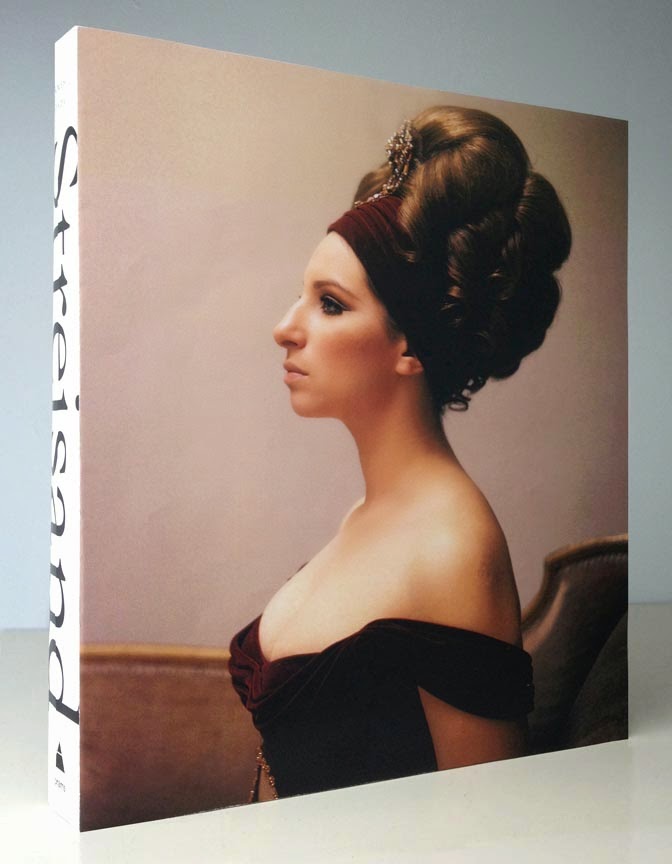
I appeared at the Egyptian Theater in Hollywood last night (11/1) to sign copies of "Streisand: In the Camera Eye" and introduce a screening of "Hello, Dolly!" It was great to meet other Barbra fans, and the movie was, as always, a delight!
Tuesday, October 14, 2014
"STREISAND: IN THE CAMERA EYE" PUBLISHED TODAY
AOL IS RUNNING A SLIDE SHOW:
http://www.makers.com/blog/funny-girl-relive-barbra-streisands-best-moments?icid=maing-grid7|maing9|dl22|sec1_lnk2%26pLid%3D545255
Thursday, October 2, 2014
INTERVIEW WITH JAMES SPADA IN BROADWAY WORLD
BWW interviews: Author JAMES SPADA's New Streisand In The Camera Eye Is Fetching
October 1
2:23
2014
Why another book about Barbra at this particular point in time?
2014 is the fiftieth anniversary of Barbra's opening on Broadway in Funny Girl. I wanted this book to be a celebration of her half century of superstardom.
What makes this book different from the other three you have written about her?
This is by far the most lavish, gorgeously produced book I've ever
done on anyone. Almost all of the photos are full page and in color. I
think my publisher, Abrams Books, did a great job in producing a really
beautiful book. I knew they would, which is why I wanted them to publish
it.
The photos you chose are out of this world beautiful. What specifications did you set up for selecting each?
There were three: How rare the photo was, how good Barbra looked in
the photo, and how well the photo illustrated some aspect of Barbra's
career, life, or beauty.
I know the process must have been arduous. Describe just
how difficult it was to find photos and to get them? It must have cost a
great deal of money and time. Was there one specific photographer or
collector who contributed more than any other?
It was difficult to find some photographers, but once I did they were
very cooperative. I had a $25,000 photo budget, so I had to haggle over
prices sometimes to stay within the budget. A collector in Spain, Jorge
Rodriguez Garcia, contributed a great number of the photos. There are
three photographers,, all now deceased, who contributed four to five
photos each: David Drew
Zingg, who spent a day with Barbra in 1963 for a "Look" magazine
profile on Barbra; Craig D. Simpson, who took the very first studio
portraits of Barbra in 1960, before she had done anything but sing in
small clubs; ad Cecil Beaton,
who took stunning portraits of Barbra as Melinda Tentrees in the 1970
film of the musical On a Clear Day You Can See Forever, including the
cover shot.
You chose a mixture of career and personal pictures. I'm
sure she's fussy about the personal side of her life. So...you must have
used caution. Just how cautious were you in deciding what to use and
what not?
I didn't mean this book to be an "illustrated biography," but rather a
collection of photos that reveal Barbra's relationship with the camera
and her photographers, both still and motion picture. That said, I did
feel I needed to illustrate her with the three most important men in her
life--first husband Elliott Gould, long-time lover Jon Peters, and second husband James Brolin.
There are three photos of her with her son Jason--a lovely portrait of
them when he was an infant, a photo in a park when he was two, and a
photo of them at the Academy Awards in 1993 for her film The Prince of
Tides, in which Jason acted with his mother. I didn't include paparazzi
photos of her with any of her many boyfriends; the only one pictured at
all is Ryan O'Neal, and that's because they made two movies together.
You went chronologically. Which decade do you feel is her most prolific? There was certainly an abundance of film work in the late 60s, early 70s, but do you feel her best work was there or later?
I'd have to say the 60s, because she did so much, and such varied, work. She sang in nightclubs and on TV shows like Ed Sullivan's; she released at least one album a year; she appeared in an off-Broadway play and in two Broadway productions, one of which, Funny Girl,
made her a superstar; she made four television specials; sang for
150,000 people in Central Park; and appeared in three lavishly produced
Hollywood musicals, winning a Best Actress Oscar for her first film, the
movie version of Funny Girl. In the 70s she began to broaden
her range and contemporize her image. In the 80s and 90s she turned to
directing as well as starring in her films.In the 2000s she began
touring again. Just last week she became the only artist to have a #1
album in six consecutive decades. So there really hasn't been a fallow
decade in Barbra's career.
Fashion-wise, what kind of clothes were special to
Barbra, on and off screen? The pictures reflect a lot of change through
the years. When did the hairstyle stop changing and why?
Early on, and even somewhat today, Barbra loved to wear clothes she
found in thrift shops--1920s finery with finely-wrought beading, or
feathers and lace and fur. She still has a caracul coat she found in a
thrift store in 1960; she wore it at her audition for her first Broadway
show, I Can Get it For You Wholesale (or rather, she dragged
it along the floor behind her, for effect, as she crossed the stage to
sing.) There are two photos in the book of her wearing it, taken in 1960
by Craig D. Simpson.
Later in the 60s, she became a fashion icon wearing clothes by Rudi Gernreich and other hip designers. Today, she favors her good friend Donna Karan, who dresses her for all her concerts.
She's had many hairstyles--pageboy and bangs in the sixties, long straight blond hair and curly red hair in the 70s, wavy dirty blond hair in the 80s. In The Prince of Tides in 1992, she first wore the shoulder-length straight blond hair she favors today. I think she just felt that the style most flattered her so why not keep it?
Later in the 60s, she became a fashion icon wearing clothes by Rudi Gernreich and other hip designers. Today, she favors her good friend Donna Karan, who dresses her for all her concerts.
She's had many hairstyles--pageboy and bangs in the sixties, long straight blond hair and curly red hair in the 70s, wavy dirty blond hair in the 80s. In The Prince of Tides in 1992, she first wore the shoulder-length straight blond hair she favors today. I think she just felt that the style most flattered her so why not keep it?
Anything that you left out of this book that might make it into another?
There were some photographers I wasn't able to reach or who declined
to be a part of the project. But I really can't see doing another book
on Barbra--unless I get to work with her on her autobiography, which
would be a dream come true for me!
Anyone who has had limited knowledge of Barbra should
find this new book a treasure. And I'm certain it will do very well. Any
final comments as you await publication?
Even those who know Barbra well will be surprised by many of the
photos in the book That was my goal, and I believe I reached it.
GO TO AMAZON.COM TO PREORDER YOUR COPY TODAY:
http://www.amazon.com/s/ref=nb_sb_noss_1?url=search-alias%3Dstripbooks&field-keywords=Streisand%20in%20the%20Camera%20Eye
GO TO AMAZON.COM TO PREORDER YOUR COPY TODAY:
http://www.amazon.com/s/ref=nb_sb_noss_1?url=search-alias%3Dstripbooks&field-keywords=Streisand%20in%20the%20Camera%20Eye
![]() |
![]() |
Sunday, September 21, 2014
Review of Barbra Streisand's New Album
http://www.amazon.com/Partners-Barbra-Streisand/dp/B00MIA0KGY/ref=sr_1_1?s=music&ie=UTF8&qid=1411344092&sr=1-1&keywords=streisand
Let's stop and think about this woman, Barbra Streisand. She has been working at the top of her game for over half a century, consistently releasing top-notch recordings and appearing in first-rate movies. So many female movie stars aged poorly and worked in Grade-B (or lower) movies (think Davis and Crawford). Many female recording stars lost their labels and had to work for inferior ones. Many saw their sales diminish until even inferior labels dropped them.
This never happened to Barbra Streisand. She's still playing starring roles, and she's still producing albums that reach #1 (as this one surely will). When it does, she will have had a #1 album in six consecutive decades--a feat only she will be able to top (it's only six years till the 2020's!).
She has done all this while maintaining a miraculously youthful voice. Her voice has changed a bit; she sometimes fails to reach the high notes as she used to; and she has occasionally sounded hoarse. But on this record she sounds great! On "It Had to Be You," her duet with Michael Buble, she sounds like she did when she first recorded it in 1964!
Some have complained about Barbra doing new versions of several of her standards--"People" with Stevie Wonder, "Evergreen" with Babyface, "The Way We Were" with Lionel Ritchie, "What Kind of Fool" with John Legend. I'm not someone who listens to Barbra's old albums much, so when I heard these songs it was like getting a visit from an old friend--one who had had a makeover!
If I have a complaint, it's that the older singers Barbra duets with--mainly Billy Joel and Stevie Wonder--don't have the voices they used to. (Lionel Richie, on the other hand, sounds fine.)
There is plenty here to please lifelong Barbra fans, and to entice younger listeners to go back into her catalog and discover all the wonders that lie in store for them.
Let's stop and think about this woman, Barbra Streisand. She has been working at the top of her game for over half a century, consistently releasing top-notch recordings and appearing in first-rate movies. So many female movie stars aged poorly and worked in Grade-B (or lower) movies (think Davis and Crawford). Many female recording stars lost their labels and had to work for inferior ones. Many saw their sales diminish until even inferior labels dropped them.
This never happened to Barbra Streisand. She's still playing starring roles, and she's still producing albums that reach #1 (as this one surely will). When it does, she will have had a #1 album in six consecutive decades--a feat only she will be able to top (it's only six years till the 2020's!).
She has done all this while maintaining a miraculously youthful voice. Her voice has changed a bit; she sometimes fails to reach the high notes as she used to; and she has occasionally sounded hoarse. But on this record she sounds great! On "It Had to Be You," her duet with Michael Buble, she sounds like she did when she first recorded it in 1964!
Some have complained about Barbra doing new versions of several of her standards--"People" with Stevie Wonder, "Evergreen" with Babyface, "The Way We Were" with Lionel Ritchie, "What Kind of Fool" with John Legend. I'm not someone who listens to Barbra's old albums much, so when I heard these songs it was like getting a visit from an old friend--one who had had a makeover!
If I have a complaint, it's that the older singers Barbra duets with--mainly Billy Joel and Stevie Wonder--don't have the voices they used to. (Lionel Richie, on the other hand, sounds fine.)
There is plenty here to please lifelong Barbra fans, and to entice younger listeners to go back into her catalog and discover all the wonders that lie in store for them.
Friday, August 22, 2014
NEW DVD GRACE KELLY BOX SET DUE THIS WEEK!!
GRACE KELLY COLLECTION This star’s two most significant movies, “High Noon” (1952) and the Hitchcock masterpiece “Rear Window” (1954), are missing from this six-DVD box. But Kelly’s uncanny poise is on display in two other Hitchcock features, “Dial M for Murder” (1954) and “To Catch a Thief” (1955), which, featuring the future princess romping around the Côte d’Azur, feels weirdly prophetic. Also included: John Ford’s “Red Dust” remake, “Mogambo” (1953); “The Country Girl” (1954); “The Bridge at Toko-Ri” (1954); “High Society” (1956); and a new documentary portrait, “Princess Grace de Monaco: A Moment in Time.” (Warner Bros.)
The New York Times
Monday, August 11, 2014
NEW BARBRA STREISAND ALBUM SET FOR SEPTEMBER 16 RELEASE!
Barbra Streisand's first studio album of original material in three years, "Partners" features duets with
Andrea Bocelli, Michael Buble, Babyface, Jason Gould, Josh Groban, Billy Joel, John Legend, John Mayer, Lionel Richie, Blake Shelton, Stevie Wonder, and....Elvis Presley! No song list yet. This could be the sixth decade a Streisand album hits #1 on the Billboard charts.
Here's Barbra's Twitter Announcement:
https://twitter.com/BarbraStreisand?original_referer=http%3A%2F%2Fbarbra-archives.com%2Fnews%2Findex.html&profile_id=20175292&tw_i=498834618918141952&tw_p=embeddedtimeline&tw_w=265775737846505472
Andrea Bocelli, Michael Buble, Babyface, Jason Gould, Josh Groban, Billy Joel, John Legend, John Mayer, Lionel Richie, Blake Shelton, Stevie Wonder, and....Elvis Presley! No song list yet. This could be the sixth decade a Streisand album hits #1 on the Billboard charts.
Here's Barbra's Twitter Announcement:
https://twitter.com/BarbraStreisand?original_referer=http%3A%2F%2Fbarbra-archives.com%2Fnews%2Findex.html&profile_id=20175292&tw_i=498834618918141952&tw_p=embeddedtimeline&tw_w=265775737846505472
Sunday, August 10, 2014
INTERESTING CAST IN "GRACE OF MONACO"
There still isn't a U.S. release date for "Grace of Monaco," but we'll all be able to see it, at least on DVD. The casting is intriguing. Beyond Nicole Kidman as Grace and Tim Roth as Prince Rainier, we have Milo Ventimiglia ("Heroes") as Rupert Allan, a writer turned publicist who was close to both Grace and Marilyn Monroe, Parker Posey as Grace's closest friend Madge Tivey-Faucon, Paz Vega as Maria Callas, Frank Langella as Father Francis Tucker, the Prince's adviser who accompanied him to America, where he proposed to Grace. Alfred Hitchcock and Aristotle Onassis are also portrayed in this film. C'mon, Weinstein Co., release it already!
Check out the film's IMDB listing:
http://www.imdb.com/title/tt2095649/
Check out the film's IMDB listing:
http://www.imdb.com/title/tt2095649/
Friday, August 1, 2014
U.S Release for 'Grace of Monaco' Near?
From Variety
After weeks of contract renegotiations, the Weinstein Co. is about to sign a new deal to retain the U.S. distribution rights of “Grace of Monaco,” Variety has learned.
Under the pact, reached with the film’s producers on Wednesday, the same day “Grace” is scheduled to premiere as the opening night film at Cannes, Harvey Weinstein has agreed to acquire the rights for $3 million — which is $2 million less than he had originally intended to fork out under a previous contract. But there will be incentives built in based on box-office performance.
The version of the film screened in the United States will be Dahan’s cut. If any changes are made, they will be mutually approved by Weinstein and Dahan working together, according to the new contract. Even though “Grace of Monaco” doesn’t have a U.S. release date yet, it will likely open at the end of the summer or early fall.
The Nicole Kidman biopic about Grace Kelly has been long delayed and has been the subject of continuous off-screen drama. Weinstein and the filmmakers had initially discussed a November 2013 window, but subsequently set a mid-March launch for the sophisticated adult drama.
When Weinstein saw a rough cut of director Olivier Dahan’s version last year, he thought the story was too dark. He wanted the film to emphasize the romantic backstory of how the beautiful actress became a princess — essentially capturing her life and relationship as more of a fairy tale.
“I like to collaborate,” Dahan said in an interview with Variety earlier this month. “From my point of view, the room was always wide open for (Weinstein), but I never really met him. I sent him different versions of the work in progress, but I never received any feedback.” The director spent nearly a year in editing, trying to find the right balance for the film’s many layers: glamour, romance, political intrigue and female empowerment.
Still, Weinstein pushed for the version of the movie that he envisioned, believing it would be far friendlier to U.S. audiences — not to mention Oscar voters.
“When Harvey created the idea of going for the Oscars, suddenly we were in a hurry and had a double rhythm,” said French producer Pierre-Ange Le Pogam in an interview with Variety. “I guess that’s where the problems started.”
Tensions mounted when Dahan disagreed with Weinstein’s changes, and publicly aired his concerns, creating a standstill between the two sides.
Weinstein was then blindsided by an announcement in the spring that the film had landed a deal for the director’s version of the film to debut at Cannes. “Grace of Monaco” opens Wednesday, May 14 in France, and has summer release dates in more than 20 countries, including England, Greece, Spain and Australia.
In the spring, Kidman met with Harvey and TWC chief David Glasser and strongly expressed her desire for their company to support her movie in America, according to a knowledgeable source. Consequently, in recent weeks, Weinstein and the producers resumed discussions in hopes of resolving their differences and striking a new distribution deal. YRF Entertainment CEO Uday Chopra, who financed the film, played a key role last week in easing tensions between Weinstein and Dahan.
Weinstein will not be attending the Cannes premiere of “Grace” due to a prior commitment.
“My wife, Georgina, and I have been in Jordan visiting two Syrian refugee camps, Al Zaatari yesterday and Azraq today,” Weinstein said in an exclusive statement to Variety. “This was a long planned trip with the UNHCR and our friend Neil Gaiman to bring attention plight of refugees who have been forced to flee Syria and the incredible work of UNHCR.
“I’m wishing Olivier, Nicole, Pierre Ange and Uday and the ‘Grace of Monaco’ team all the best for the screening in Cannes tonight.”
After weeks of contract renegotiations, the Weinstein Co. is about to sign a new deal to retain the U.S. distribution rights of “Grace of Monaco,” Variety has learned.
Under the pact, reached with the film’s producers on Wednesday, the same day “Grace” is scheduled to premiere as the opening night film at Cannes, Harvey Weinstein has agreed to acquire the rights for $3 million — which is $2 million less than he had originally intended to fork out under a previous contract. But there will be incentives built in based on box-office performance.
The version of the film screened in the United States will be Dahan’s cut. If any changes are made, they will be mutually approved by Weinstein and Dahan working together, according to the new contract. Even though “Grace of Monaco” doesn’t have a U.S. release date yet, it will likely open at the end of the summer or early fall.
The Nicole Kidman biopic about Grace Kelly has been long delayed and has been the subject of continuous off-screen drama. Weinstein and the filmmakers had initially discussed a November 2013 window, but subsequently set a mid-March launch for the sophisticated adult drama.
When Weinstein saw a rough cut of director Olivier Dahan’s version last year, he thought the story was too dark. He wanted the film to emphasize the romantic backstory of how the beautiful actress became a princess — essentially capturing her life and relationship as more of a fairy tale.
“I like to collaborate,” Dahan said in an interview with Variety earlier this month. “From my point of view, the room was always wide open for (Weinstein), but I never really met him. I sent him different versions of the work in progress, but I never received any feedback.” The director spent nearly a year in editing, trying to find the right balance for the film’s many layers: glamour, romance, political intrigue and female empowerment.
Still, Weinstein pushed for the version of the movie that he envisioned, believing it would be far friendlier to U.S. audiences — not to mention Oscar voters.
“When Harvey created the idea of going for the Oscars, suddenly we were in a hurry and had a double rhythm,” said French producer Pierre-Ange Le Pogam in an interview with Variety. “I guess that’s where the problems started.”
Tensions mounted when Dahan disagreed with Weinstein’s changes, and publicly aired his concerns, creating a standstill between the two sides.
Weinstein was then blindsided by an announcement in the spring that the film had landed a deal for the director’s version of the film to debut at Cannes. “Grace of Monaco” opens Wednesday, May 14 in France, and has summer release dates in more than 20 countries, including England, Greece, Spain and Australia.
In the spring, Kidman met with Harvey and TWC chief David Glasser and strongly expressed her desire for their company to support her movie in America, according to a knowledgeable source. Consequently, in recent weeks, Weinstein and the producers resumed discussions in hopes of resolving their differences and striking a new distribution deal. YRF Entertainment CEO Uday Chopra, who financed the film, played a key role last week in easing tensions between Weinstein and Dahan.
Weinstein will not be attending the Cannes premiere of “Grace” due to a prior commitment.
“My wife, Georgina, and I have been in Jordan visiting two Syrian refugee camps, Al Zaatari yesterday and Azraq today,” Weinstein said in an exclusive statement to Variety. “This was a long planned trip with the UNHCR and our friend Neil Gaiman to bring attention plight of refugees who have been forced to flee Syria and the incredible work of UNHCR.
“I’m wishing Olivier, Nicole, Pierre Ange and Uday and the ‘Grace of Monaco’ team all the best for the screening in Cannes tonight.”
Thursday, July 17, 2014
A Nice Appreciation of Marilyn Monroe in "Niagara."
Village Voice
Poisoned Roses: Marilyn (and Others) Dazzle Us Deadly at Femmes Noir
By Stephanie Zacharek
published: July 16, 2014
Through August 7 at Film Forum
There are at least 26 good reasons to straighten your stocking seams, touch up your lip rouge, and queue up for Film Forum's Femmes Noir series, running from July 18 through August 7.
But of all the femmes vying for our attention here, perhaps the most willful and terrifying is played by an actress whom we associate with innocence and vulnerability: In Henry Hathaway's 1953 Niagara (July 22), Marilyn Monroe plays Rose Loomis, the bored wife of Joseph Cotten's emotionally damaged war vet, George. Her beauty is resplendent, but you wouldn't call it fragile. Rose is a hip-swaying bombshell with murder in her heart; her lips, gleaming red, are an invitation to a poison kiss.
This isn't a Marilyn you want to embrace and protect. As Rose, she's alert and defiant, a woman who has defined exactly what she wants and has forged a plan to help her get it. This performance, among the star's finest, gives the lie to the idea that she couldn't really act. What it suggests, instead, is that Marilyn was a natural: Her desire to be taken seriously as an actor, and her subsequent serious study of the craft, may have made her more self-conscious, constraining her gifts rather than opening a conduit for them. In Niagara, Marilyn's Rose is self-determined, boldly sexual, almost impossibly cruel. And still, you feel for her: Mincing along in high-heeled sandals and a suit the color of a brazen afternoon sky, on the way to meet her lover, a wily operator who's as slick as Cotten's George is rumpled, Rose is everything that good girls have been taught not to be. But there's also a gorgeous futility radiating from her soul: Sometimes there's just no cure for the nagging malady of wanting something more.
Niagara is set, and was filmed, in the area around the rushing natural phenomenon that was once the stereotypical go-to spot for honeymooners. It's also the perfect setting for a honeymoon nightmare: George and Rose have been holed up in the cabin with the best view of the falls, but it turns out to be no place for lovebirds. Long past the honeymoon stage, they've been married for years, and now they're just drifting, quite literally. Somehow they've landed in a place that celebrates romance, but for them, it's the setting for disintegration. The mood inside their cabin is oppressive, airless. When George isn't crouched over a small table, building balsa-wood model cars, he's wandering around the falls late into the night, returning to find Rose only pretending to be asleep. Seconds earlier, we've seen her awake, smoking a cigarette, staring into the blank space of the damned when she hears the click of the door as George approaches, she rolls over. It's a moment of fake innocence that represents the ultimate contempt.
Rose has had it with George and has taken a lover. The great tragedy is that you can understand why: Formerly a successful sheep farmer, George has had a run of bad luck, including emerging from the war with "battle fatigue." Rose likes parties and fun, and George represents neither of those things: He has a face like a slept-in bed.
When carefree honeymoon couple Ray and Polly Cutler show up at the cabin complex--they're played by Jean Peters and Max Showalter (who at that point went by the name Casey Adams)-- they immediately know something is wrong. Polly, in particular, tries to help. When Rose defiantly requests a specific song at a party with the Cutlers--a song that has romantic significance to her, relating to her extracurricular activities--George seizes the record as it spins and breaks it to pieces, cutting his hand. He retreats to his cabin. Polly follows, intending to bandage him up, and she finds him standing in the dark, holding his wounded hand in front of him. "I suppose she sent you in here to find out if I cut it off," he snaps, and we don't have to wonder what it is.
But Rose only thinks she holds all the cards here. In a later scene, she lies in a hospital bed, restless with a purely emotional fever, a shivery foreshadowing of the direction Marilyn's own life would eventually take. You can imagine that any filmmaker who had the chance to work with her would fall under the spell of her beauty. Hathaway, with his exquisite framing skills, pays tribute in the most respectful way. When she walks away from the camera, and from us, her womanly wriggle is exaggerated. Yet the sight of it isn't prurient; it's simply the semaphore of a desperate woman on the move. (It's also, of course, sexy as hell.) In the movie's most stunning sequence--one that points the way forward five years to Vertigo--Rose is pursued on the stairway leading up to a bell tower, terror in her heart and in her eyes. She can't possibly get away with all she's done, and yet, of course, you want her to.
Poor George, her biggest victim, feels the same rankled tenderness for her that we do, and the most deeply moving moment in Niagara is a tribute to her that doesn't even show her face. George picks up a jeweled lipstick case she's dropped, opening it to reveal the tube of crimson inside, maybe the last thing to touch her lips. Does he think, at that moment, the same thing Romeo was thinking when he implored Juliet, "Sin from thy lips? O trespass sweetly urged! Give me my sin again." The Marilyn of Niagara is his sin, and ours, too. No wonder we want her again and again.
Poisoned Roses: Marilyn (and Others) Dazzle Us Deadly at Femmes Noir
By Stephanie Zacharek
published: July 16, 2014
Details:
Femmes NoirThrough August 7 at Film Forum
There are at least 26 good reasons to straighten your stocking seams, touch up your lip rouge, and queue up for Film Forum's Femmes Noir series, running from July 18 through August 7.
But of all the femmes vying for our attention here, perhaps the most willful and terrifying is played by an actress whom we associate with innocence and vulnerability: In Henry Hathaway's 1953 Niagara (July 22), Marilyn Monroe plays Rose Loomis, the bored wife of Joseph Cotten's emotionally damaged war vet, George. Her beauty is resplendent, but you wouldn't call it fragile. Rose is a hip-swaying bombshell with murder in her heart; her lips, gleaming red, are an invitation to a poison kiss.
This isn't a Marilyn you want to embrace and protect. As Rose, she's alert and defiant, a woman who has defined exactly what she wants and has forged a plan to help her get it. This performance, among the star's finest, gives the lie to the idea that she couldn't really act. What it suggests, instead, is that Marilyn was a natural: Her desire to be taken seriously as an actor, and her subsequent serious study of the craft, may have made her more self-conscious, constraining her gifts rather than opening a conduit for them. In Niagara, Marilyn's Rose is self-determined, boldly sexual, almost impossibly cruel. And still, you feel for her: Mincing along in high-heeled sandals and a suit the color of a brazen afternoon sky, on the way to meet her lover, a wily operator who's as slick as Cotten's George is rumpled, Rose is everything that good girls have been taught not to be. But there's also a gorgeous futility radiating from her soul: Sometimes there's just no cure for the nagging malady of wanting something more.
Niagara is set, and was filmed, in the area around the rushing natural phenomenon that was once the stereotypical go-to spot for honeymooners. It's also the perfect setting for a honeymoon nightmare: George and Rose have been holed up in the cabin with the best view of the falls, but it turns out to be no place for lovebirds. Long past the honeymoon stage, they've been married for years, and now they're just drifting, quite literally. Somehow they've landed in a place that celebrates romance, but for them, it's the setting for disintegration. The mood inside their cabin is oppressive, airless. When George isn't crouched over a small table, building balsa-wood model cars, he's wandering around the falls late into the night, returning to find Rose only pretending to be asleep. Seconds earlier, we've seen her awake, smoking a cigarette, staring into the blank space of the damned when she hears the click of the door as George approaches, she rolls over. It's a moment of fake innocence that represents the ultimate contempt.
Rose has had it with George and has taken a lover. The great tragedy is that you can understand why: Formerly a successful sheep farmer, George has had a run of bad luck, including emerging from the war with "battle fatigue." Rose likes parties and fun, and George represents neither of those things: He has a face like a slept-in bed.
When carefree honeymoon couple Ray and Polly Cutler show up at the cabin complex--they're played by Jean Peters and Max Showalter (who at that point went by the name Casey Adams)-- they immediately know something is wrong. Polly, in particular, tries to help. When Rose defiantly requests a specific song at a party with the Cutlers--a song that has romantic significance to her, relating to her extracurricular activities--George seizes the record as it spins and breaks it to pieces, cutting his hand. He retreats to his cabin. Polly follows, intending to bandage him up, and she finds him standing in the dark, holding his wounded hand in front of him. "I suppose she sent you in here to find out if I cut it off," he snaps, and we don't have to wonder what it is.
But Rose only thinks she holds all the cards here. In a later scene, she lies in a hospital bed, restless with a purely emotional fever, a shivery foreshadowing of the direction Marilyn's own life would eventually take. You can imagine that any filmmaker who had the chance to work with her would fall under the spell of her beauty. Hathaway, with his exquisite framing skills, pays tribute in the most respectful way. When she walks away from the camera, and from us, her womanly wriggle is exaggerated. Yet the sight of it isn't prurient; it's simply the semaphore of a desperate woman on the move. (It's also, of course, sexy as hell.) In the movie's most stunning sequence--one that points the way forward five years to Vertigo--Rose is pursued on the stairway leading up to a bell tower, terror in her heart and in her eyes. She can't possibly get away with all she's done, and yet, of course, you want her to.
Poor George, her biggest victim, feels the same rankled tenderness for her that we do, and the most deeply moving moment in Niagara is a tribute to her that doesn't even show her face. George picks up a jeweled lipstick case she's dropped, opening it to reveal the tube of crimson inside, maybe the last thing to touch her lips. Does he think, at that moment, the same thing Romeo was thinking when he implored Juliet, "Sin from thy lips? O trespass sweetly urged! Give me my sin again." The Marilyn of Niagara is his sin, and ours, too. No wonder we want her again and again.
Thursday, June 19, 2014
BARBRA JOKES WITH JOHN McCAIN ABOUT HIS SINGING HER HITS ON SNL.
Streisand on The Hill
Barbra paid a visit to Washington, DC to meet with lawmakers on Capitol Hill including Sens. John McCain (R-Ariz.), Dick Durbin (D-Ill.) and Rep. Steny Hoyer (D-Md.) to press for more funding for women’s heart disease. Streisand posed for a photo with Sen. McCain (above) and Sen. Durbin (below).
Photos courtesy of Cedars-Sinai Medical Center
Barbra joked with McCain about his appearance on SNL when he sang a medley of her hits while criticizing her politics. "Do you always sing that poorly, or were you trying to be off key?" she asked him.
Wednesday, June 11, 2014
TURNER CLASSIC MOVIES TO SHOW MONROE, LAWFORD FILMS IN JUNE
TCM will show the following films this month:
The Misfits, the last film of both Clark Gable and Marilyn Monroe. June 14, 4 p.m. EDT
Bus Stop, the film that convinced most skeptics that Marilyn was a serious actress. June 17 8 a.m. EDT
Ocean's Eleven, the last film Peter Lawford made with the Rat Pack. June 21 1:45 a.m. EDT
The Misfits, the last film of both Clark Gable and Marilyn Monroe. June 14, 4 p.m. EDT
Bus Stop, the film that convinced most skeptics that Marilyn was a serious actress. June 17 8 a.m. EDT
Ocean's Eleven, the last film Peter Lawford made with the Rat Pack. June 21 1:45 a.m. EDT
Wednesday, May 14, 2014
Streisand: In the Camera Eye Available for Pre-order on Amazon!
Use this link:
http://www.amazon.com/Streisand-Camera-Eye-James-Spada/dp/1419712411/ref=sr_1_4?s=books&ie=UTF8&qid=1399155941&sr=1-4&keywords=streisand
Saturday, May 3, 2014
LINK TO AMAZON'S "STREISAND: IN THE CAMERA EYE" LISTING
http://www.amazon.com/Streisand-Camera-Eye-James-Spada/dp/1419712411/ref=sr_1_4?s=books&ie=UTF8&qid=1399158231&sr=1-4&keywords=STREISAND
Friday, May 2, 2014
New James Spada Streisand Volume Coming in October
I'm pleased to announce that my latest Barbra Streisand book is coming from Abrams in hardcover on October 21, 2014. Here is the Abrams catalog description:
“Streisand: In the Camera Eye” is a collection of 170 of the most compelling photographs of Barbra Streisand, chosen for their rarity, beauty, and insight into Streisand’s multifaceted life and career. The pictures, most of which have never been published before, document her many phases, from her early days on Broadway, including “Funny Girl,” to her hugely popular TV specials, to her work as an actress in films such as “Hello, Dolly!,” “The Way We Were,” and “A Star Is Born.” Taken by some of the greatest names in photography—including Philippe Halsman, Francesco Scavullo, Douglas Kirkland, Bob Willoughby, and Cecil Beaton—the images also represent her fabled concerts, as well as personal moments away from the set and stage. Seven essays by Spada introduce the various periods of Streisand’s adult life, and, along with substantial anecdotal and quote-filled captions, they combine with the spectacular photos to tell the whole story of one of the world’s most popular and beloved stars.
- Trim Size: 9 x 11
- Page Count: 288
- Cover: Hardcover with jacket
- Illustrations: 170 color and black and white photos
- PRE-ORDER THE BOOK FROM AMAZON.COM HERE
Matt: After writing three books about Streisand, what made you return to the subject of Barbra Streisand again?
Spada: Four books on Barbra! I never could have imagined that back in 1974 when Barbra: The First Decade was published. But each of my books on Barbra has been different. With this one, I wanted it to be a sumptuous pictorial tribute to Streisand’s beauty and talent. I went to one of the best art book publishers in the world, Abrams, and they signed me up to do it! It will truly be the most lavishly produced of any of my books on Barbra.
Matt: The new book looks like a gorgeous “coffee table” photo book. But there’s text by you, too. Can you explain what you’ve done with Streisand: In the Camera Eye?
Spada: The book’s format is very simple and elegant. On most spreads there is a full page photo of Barbra on one page and on the other page an extended caption written by me that discusses what the photo shows and includes a quote from a costar, director, friend or observer praising Barbra and giving their explanation of why she is so special. There isn’t a negative word in the book about her.
Matt: Barbra rarely talks about it, but she has worked with many iconic photographers. And she is an amazing “model.” Does the new book comment on or illustrate that?
Spada: Absolutely. The book begins with four unpublished full color images by Craig Simpson taken when Barbra was eighteen. In one of them she looks like Audrey Hepburn or a Vogue model! There are four unpublished Cecil Beaton photos plus the cover shot, and he explains why she was the “perfect mannequin” to model the Clear Day outfits. The book illustrates all of her plays, television specials and movies, but also has many photos that are used just to illustrate her beauty.
Matt: Did you make it to any of the 2006 or 2012 Streisand concerts? Still consider yourself a fan of hers?
Spada: I did see her in 2006 but not 2012. Yes, of course I’m still a fan. Her photos, TV shows and movies have given me great pleasure since the mid-sixties and they still do to this day. It was such a joy to do this book. I had a lot of help from Jorge Rodriguez Garcia in Spain, who made his fantastic collection of Barbra photos available to me. We had this transcontinental working relationship!
Matt: What will surprise Streisand fans most about your new book?
Spada: I hope it will be the number of previously unpublished photos. I have a great one by Bob Willoughby of Barbra in the hotel pool in 1963, a few alternates from Howell Conant’s 1966 Look shoot, several unpublished shots by Mario Casilli, three amazing shots taken for the 1963 Look profile and never used, and lots more! And also, many of the previously published photos were used very small or poorly reproduced when they were first published, but in this book they’re full page and beautiful! I put this book together with Barbra’s fans in mind, and I’m confident they will be very pleased.
James Spada wrote “Barbra: The First Decade,” published in 1974; “Streisand: The Woman and the Legend,” published in 1981; and “Streisand: Her Life,” published in 1995. Spada was also one of the instrumental people involved in Barbra Quarterly, a Streisand fan magazine published in the mid-80s.
Wednesday, April 30, 2014
Barbra and Jim at the Global Gourmet Games
This weekend, Barbra Streisand and husband James Brolin attended (according to the LA Times) The Global Gourmet Games, a gala fundraiser for FasterCures, “staged as a high-spirited competition that pits guests against one another to answer questions about food, wine and related trivia, such as which country consumes the most chicken per capita.”
The LA Times wrote that “the event raised an estimated $3 million for FasterCures, an organization dedicated to accelerating medical research to find cures for life-threatening diseases.
“The gala dinner also served as a kickoff to the four-day Milken Institute Global Conference, which attracts more than 3,000 people to Beverly Hills to hear more than 650 of the world’s top thinkers discuss some of today’s most pressing issues in business, health, government and education.”
Tuesday, April 15, 2014
LIZ SMITH DEFENDS MARILYN AGAINST ARTHUR MILLER'S DEFAMATION OF HER
| In a letter to his wife, Molly Thatcher, [the director, Elia] Kazan attempts to explain his past affair with Marilyn Monroe: “I took her to dinner because she seemed like such a touching pathetic waif. She sobbed all through dinner. I wasn’t ‘interested’ in her, that came later. I got to know her and in time introduced her to Arthur Miller, who also was very taken with her. You couldn’t help being touched. She was talented, funny, vulnerable, helpless in awful pain, with no hope and some worth and not a liar, vicious, not catty and with a history of orphanism that was killing to hear. She was like all Charlie Chaplin heroines in one.” |
KAZAN, who wrote to
Molly in 1955, also revealed of Marilyn: “She is not what she appears to
be ... she is not a big sex-pot as advertised.”
This was Miller’s confession/denunciation of Monroe as a castrating, self-destructive bitch, from whom he had to escape. That Monroe was two years dead and unable to defend herself appeared of no interest to her ex-husband or her ex-lover. Miller’s pretense that the “Maggie” of his play was not Monroe — or his version of her — compounded the insult. Marilyn’s good friend, author James Baldwin, walked out of “After the Fall,” so furious was he over Miller’s characterization of her. (The star, Barbara Loden was costumed, bewigged and given the appropriate Monroe-like gestures, in case anybody didn’t quite get it.) |
| THOSE who disliked Arthur Miller —
and there were many — found some satisfaction in the fact that “After
The Fall” was his last success. He would wallow in epilogue and various
variations on Marilyn for the rest of his life. Miller’s inactivity as a writer — except for his tedious screenplay for “The Misfits” — was often blamed on Marilyn. He himself said it. But right after the Miller/Monroe divorce, columnist Max Lerner opined that it was less likely that Monroe had constricted Miller, but that he had sought her out precisely because he had run out of material. |
|
| Several weeks before her death, an
interviewer faced Marilyn with Lerner’s observation. Did she have a
comment? She paused, and then said: “If I answer, will you promise to
repeat my quote in its entirety?” The writer said yes. Marilyn replied: “No comment.” This is the only thing Marilyn Monroe ever said criticizing a husband — or anybody else in public life for that matter. She was, as Kazan noted, “not vicious.” And it is an indication of her agony, being blamed for the failures of a man she literally saved; standing with him and risking her own career as he was grilled by The House Un-American Activities Committee, in the matter of his youthful Communist flirtations. Miller and Kazan left that Marilyn out of “After The Fall.” |
|
Thursday, April 10, 2014
Wednesday, April 2, 2014
APRIL 5TH WOULD HAVE BEEN BETTE DAVIS'S 106TH BIRTHDAY!!
In celebration, here is part of the chapter on Bette's and Joan Crawford's smash hit 1962 thriller What Ever Happened to Baby Jane? in my book Bette Davis: More Than a Woman. (The book is available in eBook form from Amazon, Barnes&Noble, iTunes and other sellers.) It's a movie with enough soundstage drama to make a movie about the "Making of..." Producer's take note!
Chapter 26
Walter Blake, the personal assistant to the Hollywood director Robert Aldrich, slid out of his cab in front of the Plaza Hotel in New York. It was early summer, 1962, and he was a man with a mission: to persuade Bette Davis to star in Aldrich’s film version of Henry Farrell’s novel What Ever Happened to Baby Jane?, a thriller about a mentally unbalanced former child star living in mutual fear and loathing with her crippled sister in a decaying Hollywood mansion. In his briefcase, Blake carried a check for $25,000 made out to Bette.
“Bob Aldrich already had Joan Crawford signed to play the sister in the wheelchair,” Blake recalls, “and he really wanted Bette to play Baby Jane. Bette was broke after she left Night of the Iguana, and she was staying at the Plaza on good will and credit. We heard she was in hock to them for $30,000.”
The check Blake carried with him amounted to just about all the money Aldrich had, but he figured hard cash would be the best incentive he could offer Bette to make the movie. She knew about and liked the property, but she didn’t want to work with Crawford, who had come backstage with Chuck Bowden and Paula Laurence after a performance of Iguana to try to talk her into making the film with her. Bette was unreceptive. “Let’s make this quick, Joan,” she snapped. “I’m leaving for the country in five minutes.”
Crawford told her about the project and purred, “I’ve always wanted to work with you.” Bette looked at her and thought, This woman is full of shit.
Paula Laurence recalled that after Crawford left, Bette ranted and raved that she had wanted to buy the property, that she couldn’t stand the idea of working with Crawford, that she was suspicious of the whole enterprise. “If she thinks I’m going to play that stupid bitch in the wheelchair,” she bellowed just before she left the theater, “she’s got another think coming!”
And so Walter Blake’s job now was to get Bette’s commitment to make Baby Jane—by whatever means possible. “We knew she needed money, so we figured that if we got her to sign the back of the check, legally she’d have to do it.” Blake first telephoned Bette at the Plaza, and the reception he got wasn’t warm.
“Walter who?’ Bette barked. “Never heard of you.”
“I knew you at Warner Brothers, Miss Davis.”
“Oh yeah. Waddya want?”
“I’ve got something that you’re going to like.”
“Oh yeah? Like what?”
Blake persuaded Bette to let him come up to her posh suite, where he found her in slacks and a middy shirt, her hair in a sloppy topknot, a cigarette in one hand and a drink in the other. When he showed her the Baby Jane script, she only glanced at the title. “I know about this. Who’s gonna direct?”
“Robert Aldrich.”
“Who the hell is he?”
“He’s directed nine films, Miss Davis—Apache, Autumn Leaves, The Angry Hills—”
“I never heard of him! I bet he stinks. Who’s producing?”
“I will be.”
“I bet you stink, too!”
By now Blake feared he had made a huge blunder. “Miss Davis,” he concluded as soothingly as possible, “perhaps we should meet again after you’ve read the script. Call me when you’re finished with it and we’ll talk—I’ll take you to dinner.”
“Can you afford it?” Bette asked as she showed Blake the door.
Bette found that she loved the way Luke Heller’s script beautifully fleshed out the novel’s dark, unsettling tale: as a vaudeville headliner circa 1917, precocious child star Baby Jane Hudson had played to packed houses. Resplendent in blond ringlets and flouncy crinolines, she belted out maudlin ditties like “I’ve Written a Letter to Daddy” (whose address was “Heaven above”) to rapturous audiences. As obnoxious and spoiled offstage as she is cloying on, she completely overshadows her dark-haired, brooding sister Blanche.
By 1935, the sisters’ roles have reversed; Blanche has become a top movie star, while Jane, her childhood charms vanished, gets film jobs only because of her sister’s power. Jane is consumed with jealousy, then devastated by guilt when she blames herself for a car wreck that leaves Blanche permanently crippled.
The story then jumps to 1962. The aging Hudson sisters are mutually dependent. They live on income from Blanche’s investments, but Blanche, confined to a wheelchair in an upstairs bedroom, must rely on Jane for her food and her contact with the outside world. Still racked with remorse about the accident, Jane has become mentally unstable and a heavy drinker. She often retreats into a fantasy world fueled by her memories of her youthful stardom. Dressed in outlandish outfits copied from her days as a vaudeville moppet, her makeup troweled on, her blond wig in ringlets, she drunkenly performs “I’ve Written a Letter to Daddy” in the mirrored music room as though she were fifty years younger.
Jane’s descent into madness is hastened when she finds out that Blanche has secretly sold the house, and they must be out in six weeks. She cuts Blanche off from the outside world, stops bringing her food (except for her dead parakeet, and later a rat), and physically brutalizes her. At the same time she pathetically plans to stage a comeback.
When the cleaning lady discovers Blanche starved, gagged, and trussed up, Jane bashes the woman’s head in with a hammer. Frantic that she’ll be found out, Jane lugs her sister, now nearly comatose, into the car and drives her to the Santa Monica beach. As Blanche nears death, she confesses that it was she who caused the car crash when she tried to run Jane down. Completely gone now, Jane responds dreamily, “You mean all this time we could have been friends?”
Leaving Blanche to die on the sand, Jane joyfully performs her old dance routine on the sand as a crowd gathers and the police descend.
Bette was a bit put off by the script’s Grand Guignol excesses, but she knew that Baby Jane Hudson was a great part, and that the movie could be a big hit, especially with younger audiences of the kind that had flocked to Alfred Hitchcock’s Psycho. More importantly, Bette had no other offers—and she needed the money. She called Blake. “I read the thing,” she said curtly. “I’ll be playing Jane, right?”
Blake said yes, of course, then Bette barked, “So who’s the other broad?”
“We don’t know yet,” Blake lied. He recalled, “I couldn’t tell her it was Crawford because they were enemies. I had to get her signature on that check and then tell her, when she couldn’t back out.”
“I have a check with me for $25,000, Miss Davis,” Blake said, “and I can give it to you if you’ll sign on the back that you’ll do the movie.”
“Twenty-five thousand dollars for a movie!” Bette exploded. “Are you crazy?!”
“It’s just a down payment, a binder to say that you’ll do the movie. We can negotiate your salary, what you’ll get up front, all of that.”
“Oh,” Bette replied, and Blake saw that he had been right: Bette did need the money. She took the check, and agreed to fly to Hollywood with him the next day to meet with Aldrich. Two days later, Bette walked into the production meeting with Aldrich, saw Joan Crawford sitting next to the director, turned on her heel, and walked out. “You’ve got to be kidding,” she hissed at Blake. “I won’t work with her.”
“Well, Bette, you’ve got to,” Blake replied. “We just paid you $25,000.” When she realized Blake was right, Bette went back into the meeting, seething over Joan’s pious attitudes and ladylike airs. “There was no hello or good-bye,” Blake recalls. “The two of them together were like a Nazi and a Jew.”
Bette agreed to a salary advance of $60,000 (including the $25,000 she had already received), 10 percent of the worldwide gross profits, and $600 per week in living expenses. Crawford, in a shrewd gamble that later rankled Bette, took only $30,000 up front but 15 percent of the profits and weekly living expenses of $1,500.
Once Bette’s participation was set, she made it clear to Aldrich what was paramount on her mind. During an early meeting, she turned to the rotund, forty-four-year-old director and asked, “Have you slept with Joan?”
“No,” he replied. “But not for any lack of trying on her part.” Bette liked Aldrich’s honesty, and she felt confident that Crawford’s penchant for seducing her directors in order to get preferential treatment from them would go unsatisfied this time around.
Unlike Bette, the fifty-eight-year-old Crawford was a striking beauty who had kept herself in good enough physical condition to play romantic leads through the 1950s. But she hadn’t made a film since 1959, the year her husband, Pepsi-Cola mogul Alfred Steele, died. Steele had left her with little except a mountain of debt and a position on the board of his company. “I was lonely,” Joan said to explain why she jumped at the chance to do Baby Jane. “I was worse than lonely, I was bored out of my skull. And I needed the money.” Like Bette, Joan had a deep-seated need to work. “Inactivity is one of the great indignities of life,” she said. “The need to work is always there, bugging me.”
With his stars uneasily in place, Aldrich set out to raise money for the picture and was shocked by the chilly reception he encountered. “Four major companies refused even to read the script or scan the budget. Three distributors read the script, looked at the budget, and turned the project down. Two of those said they might be interested if I would agree to cast younger players.”
Finally Aldrich convinced Eliot Hyman, the head of the small British independent company Seven Arts, to finance the picture with Davis and Crawford with a budget under $1 million and a shooting schedule no longer than thirty days. Jack Warner (of all people) agreed to distribute the film.
With Aldrich’s assurances that this picture would be a blockbuster ringing in her ears, Bette decided to make a permanent move back to Los Angeles. With B.D. and Michael, she moved into a low-slung, contemporary, “flashy Beverly Hills house” that B.D. had found for them, complete with a projection room, a volleyball court, pool, and pool house. Bette had wanted a New England-style place, and when she saw this modern structure she said, “Oh, B.D., not another one.”
“You told me to please myself”’ B.D. huffed in reply.
Bette’s fifteen-year-old daughter was more a pampered princess than ever. She had brought her horse Stoneybrook to live with her at Grier, a private girls’ school in Pennsylvania, and then sold the animal when she followed Bette to Hollywood, where her mother made sure she was cast for a part in Baby Jane, as a nosy neighbor’s daughter. Bette let her keep the money she would be paid. B.D. told the press that she had acting ambitions, and although she would be billed in the film as Barbara Merrill, she later petitioned a court to have her name changed back to Barbara Sherry. She told the judge that she intended “to pursue a career in dramatic arts and intends to seek motion picture, television and stage engagements as a singer and actress.”
On July 19, four days prior to the start of filming, Jack Warner hosted a press luncheon for Bette, Joan, and Robert Aldrich in the trophy room at Warner Brothers. The press coverage was tremendous, and there was much anticipation of a pyrotechnic feud between these two “former movie greats.” Warner and Aldrich loved it, aware as they were that any publicity was good publicity. Photos of the two stars ran in newspapers around the world, and Bette pasted one in her scrapbook. Under the photo she scrawled, “W.B. gave a luncheon for the two former queens (only one in my opinion) at the beginning of Baby Jane. The horror is we look alike!”
They didn’t really, of course, and from the outset of filming at the Producer’s Studio on Melrose Avenue, it was clear to cast and crew that Bette Davis and Joan Crawford had very distinct personalities as well. Anna Lee, cast as the Hudsons’ nosy neighbor, vividly recalls the two of them. “Joan would arrive at the studio sharp at one minute to nine. Immaculately groomed, she’d come in with her entourage: a makeup man, a hairdresser, a secretary—there were always seven or eight people trailing after her. She would waft very regally into her dressing room and gently close the door.
“A moment or so later, you’d hear Bette clomping down the corridor, all by herself, usually swearing like a sailor about something, using quite obscene language. She’d go thundering into her dressing room and slam the door. I really think her behavior was just to shock Joan. She was definitely needling her. She put a little card up on her dressing room door that said, ‘Of all my relations, I like sex the best.’ She knew it would horrify Joan, who was very straitlaced and didn’t have much of a sense of humor about herself.”
The film critic Judith Crist, who befriended Bette in the mid-1970s, feels that the differences between Bette and Joan ran deep. “They came from totally different classes, and your roots come out. Bette had a stage background, Joan had maybe a burlesque show or two. When you got right down to it, Bette was a lady, and Joan Crawford was not. It was ironic, because Bette would swear and lumber around, and Joan of course was all piety and refinement, but class will show. Joan would pretend to be drinking water when it was really vodka, and she’d drink herself stupid in public. Bette would never do that. And whenever Joan would call me all she’d talk about were the intimate details of her medical problems. She just didn’t have any class.”
Crawford was well known for showering people with little daily gifts as a way to win their affection, and Bette was no exception. The second day of filming, she found flowers in her room from Joan. The next day, a bottle of perfume. Joan had tried the same tactic when she had first come to Warner Brothers from MGM in 1944. Bette had been amused by the gesture and a little puzzled, until someone told her that Joan was sexually interested in her. She sent the gifts back unceremoniously, and never was sure what Crawford’s motives had been. “How the hell do I know if Joan was a dyke?” Bette said. “I never let her get that close to me.”
This time, Bette ignored the gifts at first, but when they continued coming she wrote Joan a terse note thanking her but asking that she stop. “I won’t be able to reciprocate,” she wrote, “because I do not have time to shop.”
The note seems to have soured any possibility of a friendship between the two women. According to B.D., when Bette introduced her to Joan on the set, she extended her hand and Crawford “pulled back from me, putting her hand behind her back as if I were diseased.”
“Hello, dear,” Joan purred to B.D. “One thing… my daughters, Cindy and Cathy, are going to be on the set with me a great deal.… I would appreciate it if you would not try to talk to them. They have been very carefully brought up and shielded from the wicked side of the world. You, obviously, have not. I don’t want your influence to corrupt them. They are so sweet and innocent, you see.… Thank you. Bless you, dear.”
When Bette discovered that Joan had vodka in the Pepsi bottle she always kept at her side, she exploded. “That bitch is loaded half the time! How dare she pull this crap on a picture with me? I’ll kill her!”
In her infamous account of her childhood, Mommie Dearest, Joan’s eldest daughter Christina wrote, “Bette Davis was the consummate match for my mother’s storehouse of intimidation tricks. She was a shrewd professional and every bit as indomitable as her costar. Years later, Mother would only have to hear her name mentioned to start a tirade.”
There were no tirades as Baby Jane filming progressed at its breakneck pace through the summer of 1962. Bette and Joan, for all their animosities, were too professional, and too hungry for a hit movie, to slow production down with outbursts of stereotypical star temperament. Still, the atmosphere was often as frosty as the fift y-eight-degree temperature Crawford demanded on the soundstage. Joan needed the set so cold, Bette told friends, because she was always overheated from the vodka she nipped between takes.
And both actresses were frantic with insecurity. Joan fretted that Bette’s much flashier role would completely eclipse her performance; Bette, always jealous of Crawford’s glamour, ridiculed her comely appearance in the film. Soon they got caught in a game of one-upmanship: Bette “shoveled” on heavier and ghastlier makeup while Joan fought all efforts to make her look anything worse than a slightly faded beauty.
“Miss Crawford was a fool,” Bette felt. “A good actress looks the part. Why she insisted on making Blanche look glamorous, I just don’t know.”
“My reasons,” Joan countered, “were just as valid as hers, with all those layers of rice powder she wore and that ghastly lipstick. But Miss Davis was always partial to covering up her face in motion pictures. She called it ‘Art.’ Others might call it camouflage—a cover-up for the absence of beauty. My character in Jane was a bigger star, and more beautiful than her sister. Once you’ve been as famous as Blanche Hudson was, you don’t slip back and become a freak like Miss Davis preferred to see her character. Blanche also had class. Blanche had glamour. Blanche was a legend.”
“Blanche was a cripple!” Bette snorted when told of Joan’s remarks. “She was a recluse. She never left: the house or saw anybody, yet Miss Crawford made her appear as if she lived in Elizabeth Arden’s beauty salon.”
As this struggle to establish dominance escalated, Joan and Bette both began to call Aldrich every night at home. “Did you see what that bitch did to me today?” Joan would wail. As soon as Aldrich finished with Joan, Bette would call. “What did that bitch call you about?” she would demand. According to Aldrich’s son Bill, “My dad had to spend an awful lot of time trying to keep them happy.”
“Mother was on the phone to Aldrich for at least an hour every night,” B.D. recalled. “She would come home, take off her makeup, then, with hair flying all over the place, she would sit in her giant bed, in her master bedroom, with her papers all around her, and the phone. We would have to bring her dinner to her on a tray; then she would call Aldrich. She’d rehash everything that happened on the set that day, that Aldrich had to apologize for—all the slights she suffered that were unfair—and the terrible things Joan had done to her, which he would have to prevent her from doing the following day.”
“First one, then the other,” Aldrich said. “I could rely on it every night. They were like two Sherman tanks, openly despising each other.”
If there wasn’t a loud, raucous, public feud between these two grandes dames, there was a subtle and insidious one. Each woman tried to vex the other, put her off her stride, adversely affect her performance. As Joan acted a solo scene, Bette turned to Walter Blake and said, loudly enough so that Joan could hear, “She can’t act, she stinks!” Afraid that Joan would storm off the set, Aldrich piped up, “I’ve got a terrible headache. We’ve got to get through this scene.” When she finished, Joan pulled Aldrich aside. “Did you hear what she said about me?”
Another scene, one of the script’s most harrowing, called for Jane to kick Blanche senseless on their mansion’s tiled floor. To obtain the proper sound effects, Bette first viciously kicked a dummy out of camera range. Then she repeated the shot with Joan, feigning the blows. She performed the stunt flawlessly—except for one kick that grazed Joan’s head.
“I barely touched her,” Bette insisted, but Hedda Hopper reported that she had “raised a fair lump on Joan’s head.” Crawford got her revenge a few days later as Jane hauls the half-dead Blanche off her bed and drags her into the hallway. It was a difficult scene, and according to Aldrich, “Crawford wanted Bette to suffer, every inch of the way.”
Just prior to action, Joan strapped a lead-lined weight lifter’s belt around her waist, adding considerably to her heft. “It was one continuous take,” the screenwriter Lukas Heller recalled. “Bette carried her from the bed across the room and out the door. Then, as soon as she got in the hallway, out of the camera’s range, she dropped Joan and let out this bloodcurdling scream.”
“My back! Oh, God, my back!” Bette shrieked. Seemingly oblivious of Bette’s agonies, Joan stood up, and as a small smile of satisfaction spread across her face, walked elegantly off the set.
Joan had one last laugh on Bette. As Blanche nears death from starvation, there was no way Joan could look anything but awful, and her makeup reflected that. But Bette noticed that Joan’s bosom grew fuller each day. “Christ!” she bellowed to B.D. “You never know what size boobs that broad has strapped on! She must have a different set for each day of the week!… She’s supposed to be shriveling away while Baby Jane starves her to death, but her tits keep growing! I keep running into them like the Hollywood Hills!”
During the last week of filming, Bette pulled Walter Blake aside and asked him, “When is this goddamn picture gonna end?”
“It’s supposed to wrap this Friday night,” Blake assured her. “Why?”
“I want to go to bed with Bob Aldrich.”
“But he’s married!” Blake sputtered.
“You old-fashioned sonofabitch,” Bette laughed. “What’s the matter with you? What the hell do I care if he’s married?”
Bette had convinced herself, B.D. recalled, that Aldrich “was madly in love with her and couldn’t stand Joan.” Apparently Bette felt it more honorable to sleep with the director at the end of filming, rather than at the beginning, as Joan had preferred.
“I’m going to throw a big party the last day of filming,” Bette told
Blake. “I want everybody who worked on the picture to be there. And I want you to be certain that Bob shows up.” The clear implication, the producer knew, was that Bette planned to seduce Aldrich that night.
Aldrich wanted nothing to do with Bette’s romantic fantasy, and he used the heavy rain the evening of the party as an excuse not to go. Bette, however, wasn’t about to let her prey off the hook that easily. Amid more than a hundred guests (they did not include Joan Crawford, who, Walter Blake says, had “high-tailed it back to New York”), Bette kept asking Blake, “Where’s Bob?”
“I don’t know, Bette.”
“Well, call him, for crissakes!”
Blake did as he was told. “Do I have to go through with this?” Aldrich pleaded.
“We’ve got to keep her happy, Bob. You don’t want her getting her nose out of joint and refusing to do publicity or something. Come to the party. You can finesse things.”
Aldrich relented, but when he got to Bette’s house his car became mired in mud. He honked his horn and Blake ran out to his boss’s little sports car. “I’m going back!” Aldrich called out through the driving rain. “This is ridiculous! Find somebody to take me home.”
Frantic, Blake looked back toward the house. “But what about her)”
“You take care of her,” Aldrich responded, and rolled up the window.
If Bette was disappointed by Aldrich’s lack of sexual interest in her, she was greatly encouraged by the word-of-mouth on Baby Jane. Even in rough cut, it was clear that the picture was good, the performances were vivid, and that the picture had a strong chance to be a blockbuster. Confident that she was on the cusp of a major comeback, Bette approached Jack Warner for a $75,000 loan against her share of the film’s profits so that she could buy a New England-style cottage at 1100 Stone Canyon in the exclusive enclave of Bel Air. When Warner saw the picture, he wrote out a check. Bette christened her new home Honeysuckle Hill.
Back in Hollywood permanently, and certain that her star was again on the ascent, Bette was emboldened to announce to the motion picture industry—in a unique, provocative way—that she was ready for more work. On the morning of September 21, readers of the motion picture bibles Daily Variety and The Hollywood Reporter raised their eyebrows when they saw a help-wanted ad accompanied by a photo of Bette Davis:
Situation Wanted, Women: Mother of Three—10, 11 & 15—divorcee. American. Thirty years experience as an actress in motion pictures. Mobile still and more affable than rumor would have it. Wants steady employment in Hollywood. (Has had Broadway.) Bette Davis c/o Martin Baum, G.A.C. References upon request.
For an investment of $500, Bette’s ads brought her enormous publicity, but not all of it was positive. Her associates knew of her sometimes sardonic sense of humor, and saw the ad as vintage Davis cheek. But others were stunned by what they perceived as a washed-up former great begging for work. The truth lay somewhere in between, and Bette’s comments at the time reflected both sides. “The ad was tongue-in-cheek,” she told the press, “but it was a deep dig as well. My career was not in jeopardy; if I was truly unemployed, I could never have taken the advertisement.”
Four days later, Bette spoke to the Hollywood Women’s Press Club, and admitted that she had placed a lot of stock in the advertisement: “I have flung down the gauntlet.… I am back with a vengeance.… I may fail in my attempts to regain my place in the sun, but I do ask for the chance to prove whether I can or can’t.”
Less than a month later, her prospects looked good. Baby Jane was previewed at the Pantages Theatre in Hollywood, and Boxoffice Magazine sensed a phenomenon in the making. The picture, their critic thought, was “a memorable movie-going event… the applause was so tremendous at times it was difficult to hear the dialogue. Both actresses give nothing less than Oscar-winning performances.” Word spread that Baby Jane was a stunning comeback for both these movie legends, and when a second screening was held in New York, the crush of fans was so thick that it took Joan Crawford thirty minutes to get from the theater lobby to her car.
What Ever Happened to Baby Jane? opened on November 6 in a national saturation booking. Overnight, the picture became a sensation, the movie everyone had to see. The film earned back its production cost in just eleven days, catapulting Joan and Bette back to the top of the heap—and back in the money as well.
While audiences—especially young viewers—loved the movie, it sparked fierce controversy among some critics whose memories of Bette and Joan were locked into Dark Victory and Mildred Pierce. The reviews ran the gamut from raves to harsh put-downs.
“Baby Jane is one of the best shockers since Psycho,” Harrison Carroll wrote in the Los Angeles Herald-Examiner. “Robert Aldrich has extracted the utmost in shudders from this tense thriller. It makes the flesh crawl.” For Saturday Review, Arthur Knight raved that “Baby Jane achieves its goal with something breathlessly close to perfection. It is a shocker, and at the same time a superb showcase for two of Hollywood’s most accomplished actresses. Scenes that in lesser hands would verge on the ludicrous simply crackle with tension—or, as in the shots of Miss Davis dancing raptly on a crowded beach, they are filled with unbearable pathos.”
Most of the naysayers were concentrated in New York. The Daily News gave it just two and a half stars out of a possible four and questioned the taste and judgment of Davis and Crawford for accepting such an “unworthy” vehicle. Bosley Crowther in The New York Times labeled Bette and Joan “a couple of formidable freaks” and added that the picture “…does not afford either the opportunity to do more than wear grotesque costumes, make up to look like witches and chew the scenery to shreds.”
When B.D. saw the picture, she turned to Bette and said, “This time you’ve gone too far, Mother.” But at least one of Bette’s associates thought she wasn’t acting at all. Her former secretary, Bridget Price, told Virginia Conroy after she saw the film that this was “the true Bette—screaming, laughing hysterically and generally being as bawdy as possible.”
The most perceptive of the critics was Andrew Sarris in Movie magazine, who predicted, “Like Psycho, Baby Jane seems destined to be seen and not honored.” The comparison was apt. While Baby Jane wasn’t in the same league as the Hitchcock classic of two years earlier, both films had been crafted on a limited budget by a sure-handed director who wasn’t afraid to limn some delicious moments of black humor out of a gothic horror story. Both films broke box-office records even as they polarized the critics.
Where Baby Jane differed most from the story-driven, delicately acted Psycho was in the staggeringly over-the-top performance of Bette Davis. With her face caked with chalky-white makeup, her eyes ringed in heavy black mascara, her wig a frowsy mass of ringlets, Bette attacked the role of Jane Hudson with all the strength, courage, vigor, and abandon that only a cinematic artist of her genius could muster. Sloppy, bellicose, and bitchy, she slouches defiantly through the first few scenes in a flatfooted walk she told a friend she modeled on her sister Bobby’s. In many ways her Jane is not unlike what the Mildred Rogers of Of Human Bondage might have turned into had she lived long enough.
Bette delineates Jane’s mercurial emotional shifts with acuity. She is a vile harridan one moment, a simpering, terrified child the next. Hateful, she nonetheless evokes real sympathy when she sees her haggard, grotesque face come into sharp focus in the mirror—perhaps for the first time—in the midst of one of her pathetic vaudeville flashbacks.
Crawford’s performance, far subtler, is outstanding as well, especially considering what a passive victim Blanche must have seemed on paper. Her almost masculine face and keenly expressive eyes give Blanche an inner strength that would have been missing with most other actresses and that makes her growing dependence on Jane all the more pathetic. As one critic observed, Joan’s performance provided “the eye of the hurricane” around which Bette stormed. One actress was fire and wind and fury, the other granite. Together they created an unforgettable team.
Chapter 26
Walter Blake, the personal assistant to the Hollywood director Robert Aldrich, slid out of his cab in front of the Plaza Hotel in New York. It was early summer, 1962, and he was a man with a mission: to persuade Bette Davis to star in Aldrich’s film version of Henry Farrell’s novel What Ever Happened to Baby Jane?, a thriller about a mentally unbalanced former child star living in mutual fear and loathing with her crippled sister in a decaying Hollywood mansion. In his briefcase, Blake carried a check for $25,000 made out to Bette.
“Bob Aldrich already had Joan Crawford signed to play the sister in the wheelchair,” Blake recalls, “and he really wanted Bette to play Baby Jane. Bette was broke after she left Night of the Iguana, and she was staying at the Plaza on good will and credit. We heard she was in hock to them for $30,000.”
The check Blake carried with him amounted to just about all the money Aldrich had, but he figured hard cash would be the best incentive he could offer Bette to make the movie. She knew about and liked the property, but she didn’t want to work with Crawford, who had come backstage with Chuck Bowden and Paula Laurence after a performance of Iguana to try to talk her into making the film with her. Bette was unreceptive. “Let’s make this quick, Joan,” she snapped. “I’m leaving for the country in five minutes.”
Crawford told her about the project and purred, “I’ve always wanted to work with you.” Bette looked at her and thought, This woman is full of shit.
Paula Laurence recalled that after Crawford left, Bette ranted and raved that she had wanted to buy the property, that she couldn’t stand the idea of working with Crawford, that she was suspicious of the whole enterprise. “If she thinks I’m going to play that stupid bitch in the wheelchair,” she bellowed just before she left the theater, “she’s got another think coming!”
And so Walter Blake’s job now was to get Bette’s commitment to make Baby Jane—by whatever means possible. “We knew she needed money, so we figured that if we got her to sign the back of the check, legally she’d have to do it.” Blake first telephoned Bette at the Plaza, and the reception he got wasn’t warm.
“Walter who?’ Bette barked. “Never heard of you.”
“I knew you at Warner Brothers, Miss Davis.”
“Oh yeah. Waddya want?”
“I’ve got something that you’re going to like.”
“Oh yeah? Like what?”
Blake persuaded Bette to let him come up to her posh suite, where he found her in slacks and a middy shirt, her hair in a sloppy topknot, a cigarette in one hand and a drink in the other. When he showed her the Baby Jane script, she only glanced at the title. “I know about this. Who’s gonna direct?”
“Robert Aldrich.”
“Who the hell is he?”
“He’s directed nine films, Miss Davis—Apache, Autumn Leaves, The Angry Hills—”
“I never heard of him! I bet he stinks. Who’s producing?”
“I will be.”
“I bet you stink, too!”
By now Blake feared he had made a huge blunder. “Miss Davis,” he concluded as soothingly as possible, “perhaps we should meet again after you’ve read the script. Call me when you’re finished with it and we’ll talk—I’ll take you to dinner.”
“Can you afford it?” Bette asked as she showed Blake the door.
Bette found that she loved the way Luke Heller’s script beautifully fleshed out the novel’s dark, unsettling tale: as a vaudeville headliner circa 1917, precocious child star Baby Jane Hudson had played to packed houses. Resplendent in blond ringlets and flouncy crinolines, she belted out maudlin ditties like “I’ve Written a Letter to Daddy” (whose address was “Heaven above”) to rapturous audiences. As obnoxious and spoiled offstage as she is cloying on, she completely overshadows her dark-haired, brooding sister Blanche.
By 1935, the sisters’ roles have reversed; Blanche has become a top movie star, while Jane, her childhood charms vanished, gets film jobs only because of her sister’s power. Jane is consumed with jealousy, then devastated by guilt when she blames herself for a car wreck that leaves Blanche permanently crippled.
The story then jumps to 1962. The aging Hudson sisters are mutually dependent. They live on income from Blanche’s investments, but Blanche, confined to a wheelchair in an upstairs bedroom, must rely on Jane for her food and her contact with the outside world. Still racked with remorse about the accident, Jane has become mentally unstable and a heavy drinker. She often retreats into a fantasy world fueled by her memories of her youthful stardom. Dressed in outlandish outfits copied from her days as a vaudeville moppet, her makeup troweled on, her blond wig in ringlets, she drunkenly performs “I’ve Written a Letter to Daddy” in the mirrored music room as though she were fifty years younger.
Jane’s descent into madness is hastened when she finds out that Blanche has secretly sold the house, and they must be out in six weeks. She cuts Blanche off from the outside world, stops bringing her food (except for her dead parakeet, and later a rat), and physically brutalizes her. At the same time she pathetically plans to stage a comeback.
When the cleaning lady discovers Blanche starved, gagged, and trussed up, Jane bashes the woman’s head in with a hammer. Frantic that she’ll be found out, Jane lugs her sister, now nearly comatose, into the car and drives her to the Santa Monica beach. As Blanche nears death, she confesses that it was she who caused the car crash when she tried to run Jane down. Completely gone now, Jane responds dreamily, “You mean all this time we could have been friends?”
Leaving Blanche to die on the sand, Jane joyfully performs her old dance routine on the sand as a crowd gathers and the police descend.
Bette was a bit put off by the script’s Grand Guignol excesses, but she knew that Baby Jane Hudson was a great part, and that the movie could be a big hit, especially with younger audiences of the kind that had flocked to Alfred Hitchcock’s Psycho. More importantly, Bette had no other offers—and she needed the money. She called Blake. “I read the thing,” she said curtly. “I’ll be playing Jane, right?”
Blake said yes, of course, then Bette barked, “So who’s the other broad?”
“We don’t know yet,” Blake lied. He recalled, “I couldn’t tell her it was Crawford because they were enemies. I had to get her signature on that check and then tell her, when she couldn’t back out.”
“I have a check with me for $25,000, Miss Davis,” Blake said, “and I can give it to you if you’ll sign on the back that you’ll do the movie.”
“Twenty-five thousand dollars for a movie!” Bette exploded. “Are you crazy?!”
“It’s just a down payment, a binder to say that you’ll do the movie. We can negotiate your salary, what you’ll get up front, all of that.”
“Oh,” Bette replied, and Blake saw that he had been right: Bette did need the money. She took the check, and agreed to fly to Hollywood with him the next day to meet with Aldrich. Two days later, Bette walked into the production meeting with Aldrich, saw Joan Crawford sitting next to the director, turned on her heel, and walked out. “You’ve got to be kidding,” she hissed at Blake. “I won’t work with her.”
“Well, Bette, you’ve got to,” Blake replied. “We just paid you $25,000.” When she realized Blake was right, Bette went back into the meeting, seething over Joan’s pious attitudes and ladylike airs. “There was no hello or good-bye,” Blake recalls. “The two of them together were like a Nazi and a Jew.”
Bette agreed to a salary advance of $60,000 (including the $25,000 she had already received), 10 percent of the worldwide gross profits, and $600 per week in living expenses. Crawford, in a shrewd gamble that later rankled Bette, took only $30,000 up front but 15 percent of the profits and weekly living expenses of $1,500.
Once Bette’s participation was set, she made it clear to Aldrich what was paramount on her mind. During an early meeting, she turned to the rotund, forty-four-year-old director and asked, “Have you slept with Joan?”
“No,” he replied. “But not for any lack of trying on her part.” Bette liked Aldrich’s honesty, and she felt confident that Crawford’s penchant for seducing her directors in order to get preferential treatment from them would go unsatisfied this time around.
Unlike Bette, the fifty-eight-year-old Crawford was a striking beauty who had kept herself in good enough physical condition to play romantic leads through the 1950s. But she hadn’t made a film since 1959, the year her husband, Pepsi-Cola mogul Alfred Steele, died. Steele had left her with little except a mountain of debt and a position on the board of his company. “I was lonely,” Joan said to explain why she jumped at the chance to do Baby Jane. “I was worse than lonely, I was bored out of my skull. And I needed the money.” Like Bette, Joan had a deep-seated need to work. “Inactivity is one of the great indignities of life,” she said. “The need to work is always there, bugging me.”
With his stars uneasily in place, Aldrich set out to raise money for the picture and was shocked by the chilly reception he encountered. “Four major companies refused even to read the script or scan the budget. Three distributors read the script, looked at the budget, and turned the project down. Two of those said they might be interested if I would agree to cast younger players.”
Finally Aldrich convinced Eliot Hyman, the head of the small British independent company Seven Arts, to finance the picture with Davis and Crawford with a budget under $1 million and a shooting schedule no longer than thirty days. Jack Warner (of all people) agreed to distribute the film.
With Aldrich’s assurances that this picture would be a blockbuster ringing in her ears, Bette decided to make a permanent move back to Los Angeles. With B.D. and Michael, she moved into a low-slung, contemporary, “flashy Beverly Hills house” that B.D. had found for them, complete with a projection room, a volleyball court, pool, and pool house. Bette had wanted a New England-style place, and when she saw this modern structure she said, “Oh, B.D., not another one.”
“You told me to please myself”’ B.D. huffed in reply.
Bette’s fifteen-year-old daughter was more a pampered princess than ever. She had brought her horse Stoneybrook to live with her at Grier, a private girls’ school in Pennsylvania, and then sold the animal when she followed Bette to Hollywood, where her mother made sure she was cast for a part in Baby Jane, as a nosy neighbor’s daughter. Bette let her keep the money she would be paid. B.D. told the press that she had acting ambitions, and although she would be billed in the film as Barbara Merrill, she later petitioned a court to have her name changed back to Barbara Sherry. She told the judge that she intended “to pursue a career in dramatic arts and intends to seek motion picture, television and stage engagements as a singer and actress.”
On July 19, four days prior to the start of filming, Jack Warner hosted a press luncheon for Bette, Joan, and Robert Aldrich in the trophy room at Warner Brothers. The press coverage was tremendous, and there was much anticipation of a pyrotechnic feud between these two “former movie greats.” Warner and Aldrich loved it, aware as they were that any publicity was good publicity. Photos of the two stars ran in newspapers around the world, and Bette pasted one in her scrapbook. Under the photo she scrawled, “W.B. gave a luncheon for the two former queens (only one in my opinion) at the beginning of Baby Jane. The horror is we look alike!”
They didn’t really, of course, and from the outset of filming at the Producer’s Studio on Melrose Avenue, it was clear to cast and crew that Bette Davis and Joan Crawford had very distinct personalities as well. Anna Lee, cast as the Hudsons’ nosy neighbor, vividly recalls the two of them. “Joan would arrive at the studio sharp at one minute to nine. Immaculately groomed, she’d come in with her entourage: a makeup man, a hairdresser, a secretary—there were always seven or eight people trailing after her. She would waft very regally into her dressing room and gently close the door.
“A moment or so later, you’d hear Bette clomping down the corridor, all by herself, usually swearing like a sailor about something, using quite obscene language. She’d go thundering into her dressing room and slam the door. I really think her behavior was just to shock Joan. She was definitely needling her. She put a little card up on her dressing room door that said, ‘Of all my relations, I like sex the best.’ She knew it would horrify Joan, who was very straitlaced and didn’t have much of a sense of humor about herself.”
The film critic Judith Crist, who befriended Bette in the mid-1970s, feels that the differences between Bette and Joan ran deep. “They came from totally different classes, and your roots come out. Bette had a stage background, Joan had maybe a burlesque show or two. When you got right down to it, Bette was a lady, and Joan Crawford was not. It was ironic, because Bette would swear and lumber around, and Joan of course was all piety and refinement, but class will show. Joan would pretend to be drinking water when it was really vodka, and she’d drink herself stupid in public. Bette would never do that. And whenever Joan would call me all she’d talk about were the intimate details of her medical problems. She just didn’t have any class.”
Crawford was well known for showering people with little daily gifts as a way to win their affection, and Bette was no exception. The second day of filming, she found flowers in her room from Joan. The next day, a bottle of perfume. Joan had tried the same tactic when she had first come to Warner Brothers from MGM in 1944. Bette had been amused by the gesture and a little puzzled, until someone told her that Joan was sexually interested in her. She sent the gifts back unceremoniously, and never was sure what Crawford’s motives had been. “How the hell do I know if Joan was a dyke?” Bette said. “I never let her get that close to me.”
This time, Bette ignored the gifts at first, but when they continued coming she wrote Joan a terse note thanking her but asking that she stop. “I won’t be able to reciprocate,” she wrote, “because I do not have time to shop.”
The note seems to have soured any possibility of a friendship between the two women. According to B.D., when Bette introduced her to Joan on the set, she extended her hand and Crawford “pulled back from me, putting her hand behind her back as if I were diseased.”
“Hello, dear,” Joan purred to B.D. “One thing… my daughters, Cindy and Cathy, are going to be on the set with me a great deal.… I would appreciate it if you would not try to talk to them. They have been very carefully brought up and shielded from the wicked side of the world. You, obviously, have not. I don’t want your influence to corrupt them. They are so sweet and innocent, you see.… Thank you. Bless you, dear.”
When Bette discovered that Joan had vodka in the Pepsi bottle she always kept at her side, she exploded. “That bitch is loaded half the time! How dare she pull this crap on a picture with me? I’ll kill her!”
In her infamous account of her childhood, Mommie Dearest, Joan’s eldest daughter Christina wrote, “Bette Davis was the consummate match for my mother’s storehouse of intimidation tricks. She was a shrewd professional and every bit as indomitable as her costar. Years later, Mother would only have to hear her name mentioned to start a tirade.”
There were no tirades as Baby Jane filming progressed at its breakneck pace through the summer of 1962. Bette and Joan, for all their animosities, were too professional, and too hungry for a hit movie, to slow production down with outbursts of stereotypical star temperament. Still, the atmosphere was often as frosty as the fift y-eight-degree temperature Crawford demanded on the soundstage. Joan needed the set so cold, Bette told friends, because she was always overheated from the vodka she nipped between takes.
And both actresses were frantic with insecurity. Joan fretted that Bette’s much flashier role would completely eclipse her performance; Bette, always jealous of Crawford’s glamour, ridiculed her comely appearance in the film. Soon they got caught in a game of one-upmanship: Bette “shoveled” on heavier and ghastlier makeup while Joan fought all efforts to make her look anything worse than a slightly faded beauty.
“Miss Crawford was a fool,” Bette felt. “A good actress looks the part. Why she insisted on making Blanche look glamorous, I just don’t know.”
“My reasons,” Joan countered, “were just as valid as hers, with all those layers of rice powder she wore and that ghastly lipstick. But Miss Davis was always partial to covering up her face in motion pictures. She called it ‘Art.’ Others might call it camouflage—a cover-up for the absence of beauty. My character in Jane was a bigger star, and more beautiful than her sister. Once you’ve been as famous as Blanche Hudson was, you don’t slip back and become a freak like Miss Davis preferred to see her character. Blanche also had class. Blanche had glamour. Blanche was a legend.”
“Blanche was a cripple!” Bette snorted when told of Joan’s remarks. “She was a recluse. She never left: the house or saw anybody, yet Miss Crawford made her appear as if she lived in Elizabeth Arden’s beauty salon.”
As this struggle to establish dominance escalated, Joan and Bette both began to call Aldrich every night at home. “Did you see what that bitch did to me today?” Joan would wail. As soon as Aldrich finished with Joan, Bette would call. “What did that bitch call you about?” she would demand. According to Aldrich’s son Bill, “My dad had to spend an awful lot of time trying to keep them happy.”
“Mother was on the phone to Aldrich for at least an hour every night,” B.D. recalled. “She would come home, take off her makeup, then, with hair flying all over the place, she would sit in her giant bed, in her master bedroom, with her papers all around her, and the phone. We would have to bring her dinner to her on a tray; then she would call Aldrich. She’d rehash everything that happened on the set that day, that Aldrich had to apologize for—all the slights she suffered that were unfair—and the terrible things Joan had done to her, which he would have to prevent her from doing the following day.”
“First one, then the other,” Aldrich said. “I could rely on it every night. They were like two Sherman tanks, openly despising each other.”
If there wasn’t a loud, raucous, public feud between these two grandes dames, there was a subtle and insidious one. Each woman tried to vex the other, put her off her stride, adversely affect her performance. As Joan acted a solo scene, Bette turned to Walter Blake and said, loudly enough so that Joan could hear, “She can’t act, she stinks!” Afraid that Joan would storm off the set, Aldrich piped up, “I’ve got a terrible headache. We’ve got to get through this scene.” When she finished, Joan pulled Aldrich aside. “Did you hear what she said about me?”
Another scene, one of the script’s most harrowing, called for Jane to kick Blanche senseless on their mansion’s tiled floor. To obtain the proper sound effects, Bette first viciously kicked a dummy out of camera range. Then she repeated the shot with Joan, feigning the blows. She performed the stunt flawlessly—except for one kick that grazed Joan’s head.
“I barely touched her,” Bette insisted, but Hedda Hopper reported that she had “raised a fair lump on Joan’s head.” Crawford got her revenge a few days later as Jane hauls the half-dead Blanche off her bed and drags her into the hallway. It was a difficult scene, and according to Aldrich, “Crawford wanted Bette to suffer, every inch of the way.”
Just prior to action, Joan strapped a lead-lined weight lifter’s belt around her waist, adding considerably to her heft. “It was one continuous take,” the screenwriter Lukas Heller recalled. “Bette carried her from the bed across the room and out the door. Then, as soon as she got in the hallway, out of the camera’s range, she dropped Joan and let out this bloodcurdling scream.”
“My back! Oh, God, my back!” Bette shrieked. Seemingly oblivious of Bette’s agonies, Joan stood up, and as a small smile of satisfaction spread across her face, walked elegantly off the set.
Joan had one last laugh on Bette. As Blanche nears death from starvation, there was no way Joan could look anything but awful, and her makeup reflected that. But Bette noticed that Joan’s bosom grew fuller each day. “Christ!” she bellowed to B.D. “You never know what size boobs that broad has strapped on! She must have a different set for each day of the week!… She’s supposed to be shriveling away while Baby Jane starves her to death, but her tits keep growing! I keep running into them like the Hollywood Hills!”
During the last week of filming, Bette pulled Walter Blake aside and asked him, “When is this goddamn picture gonna end?”
“It’s supposed to wrap this Friday night,” Blake assured her. “Why?”
“I want to go to bed with Bob Aldrich.”
“But he’s married!” Blake sputtered.
“You old-fashioned sonofabitch,” Bette laughed. “What’s the matter with you? What the hell do I care if he’s married?”
Bette had convinced herself, B.D. recalled, that Aldrich “was madly in love with her and couldn’t stand Joan.” Apparently Bette felt it more honorable to sleep with the director at the end of filming, rather than at the beginning, as Joan had preferred.
“I’m going to throw a big party the last day of filming,” Bette told
Blake. “I want everybody who worked on the picture to be there. And I want you to be certain that Bob shows up.” The clear implication, the producer knew, was that Bette planned to seduce Aldrich that night.
Aldrich wanted nothing to do with Bette’s romantic fantasy, and he used the heavy rain the evening of the party as an excuse not to go. Bette, however, wasn’t about to let her prey off the hook that easily. Amid more than a hundred guests (they did not include Joan Crawford, who, Walter Blake says, had “high-tailed it back to New York”), Bette kept asking Blake, “Where’s Bob?”
“I don’t know, Bette.”
“Well, call him, for crissakes!”
Blake did as he was told. “Do I have to go through with this?” Aldrich pleaded.
“We’ve got to keep her happy, Bob. You don’t want her getting her nose out of joint and refusing to do publicity or something. Come to the party. You can finesse things.”
Aldrich relented, but when he got to Bette’s house his car became mired in mud. He honked his horn and Blake ran out to his boss’s little sports car. “I’m going back!” Aldrich called out through the driving rain. “This is ridiculous! Find somebody to take me home.”
Frantic, Blake looked back toward the house. “But what about her)”
“You take care of her,” Aldrich responded, and rolled up the window.
If Bette was disappointed by Aldrich’s lack of sexual interest in her, she was greatly encouraged by the word-of-mouth on Baby Jane. Even in rough cut, it was clear that the picture was good, the performances were vivid, and that the picture had a strong chance to be a blockbuster. Confident that she was on the cusp of a major comeback, Bette approached Jack Warner for a $75,000 loan against her share of the film’s profits so that she could buy a New England-style cottage at 1100 Stone Canyon in the exclusive enclave of Bel Air. When Warner saw the picture, he wrote out a check. Bette christened her new home Honeysuckle Hill.
Back in Hollywood permanently, and certain that her star was again on the ascent, Bette was emboldened to announce to the motion picture industry—in a unique, provocative way—that she was ready for more work. On the morning of September 21, readers of the motion picture bibles Daily Variety and The Hollywood Reporter raised their eyebrows when they saw a help-wanted ad accompanied by a photo of Bette Davis:
Situation Wanted, Women: Mother of Three—10, 11 & 15—divorcee. American. Thirty years experience as an actress in motion pictures. Mobile still and more affable than rumor would have it. Wants steady employment in Hollywood. (Has had Broadway.) Bette Davis c/o Martin Baum, G.A.C. References upon request.
For an investment of $500, Bette’s ads brought her enormous publicity, but not all of it was positive. Her associates knew of her sometimes sardonic sense of humor, and saw the ad as vintage Davis cheek. But others were stunned by what they perceived as a washed-up former great begging for work. The truth lay somewhere in between, and Bette’s comments at the time reflected both sides. “The ad was tongue-in-cheek,” she told the press, “but it was a deep dig as well. My career was not in jeopardy; if I was truly unemployed, I could never have taken the advertisement.”
Four days later, Bette spoke to the Hollywood Women’s Press Club, and admitted that she had placed a lot of stock in the advertisement: “I have flung down the gauntlet.… I am back with a vengeance.… I may fail in my attempts to regain my place in the sun, but I do ask for the chance to prove whether I can or can’t.”
Less than a month later, her prospects looked good. Baby Jane was previewed at the Pantages Theatre in Hollywood, and Boxoffice Magazine sensed a phenomenon in the making. The picture, their critic thought, was “a memorable movie-going event… the applause was so tremendous at times it was difficult to hear the dialogue. Both actresses give nothing less than Oscar-winning performances.” Word spread that Baby Jane was a stunning comeback for both these movie legends, and when a second screening was held in New York, the crush of fans was so thick that it took Joan Crawford thirty minutes to get from the theater lobby to her car.
What Ever Happened to Baby Jane? opened on November 6 in a national saturation booking. Overnight, the picture became a sensation, the movie everyone had to see. The film earned back its production cost in just eleven days, catapulting Joan and Bette back to the top of the heap—and back in the money as well.
While audiences—especially young viewers—loved the movie, it sparked fierce controversy among some critics whose memories of Bette and Joan were locked into Dark Victory and Mildred Pierce. The reviews ran the gamut from raves to harsh put-downs.
“Baby Jane is one of the best shockers since Psycho,” Harrison Carroll wrote in the Los Angeles Herald-Examiner. “Robert Aldrich has extracted the utmost in shudders from this tense thriller. It makes the flesh crawl.” For Saturday Review, Arthur Knight raved that “Baby Jane achieves its goal with something breathlessly close to perfection. It is a shocker, and at the same time a superb showcase for two of Hollywood’s most accomplished actresses. Scenes that in lesser hands would verge on the ludicrous simply crackle with tension—or, as in the shots of Miss Davis dancing raptly on a crowded beach, they are filled with unbearable pathos.”
Most of the naysayers were concentrated in New York. The Daily News gave it just two and a half stars out of a possible four and questioned the taste and judgment of Davis and Crawford for accepting such an “unworthy” vehicle. Bosley Crowther in The New York Times labeled Bette and Joan “a couple of formidable freaks” and added that the picture “…does not afford either the opportunity to do more than wear grotesque costumes, make up to look like witches and chew the scenery to shreds.”
When B.D. saw the picture, she turned to Bette and said, “This time you’ve gone too far, Mother.” But at least one of Bette’s associates thought she wasn’t acting at all. Her former secretary, Bridget Price, told Virginia Conroy after she saw the film that this was “the true Bette—screaming, laughing hysterically and generally being as bawdy as possible.”
The most perceptive of the critics was Andrew Sarris in Movie magazine, who predicted, “Like Psycho, Baby Jane seems destined to be seen and not honored.” The comparison was apt. While Baby Jane wasn’t in the same league as the Hitchcock classic of two years earlier, both films had been crafted on a limited budget by a sure-handed director who wasn’t afraid to limn some delicious moments of black humor out of a gothic horror story. Both films broke box-office records even as they polarized the critics.
Where Baby Jane differed most from the story-driven, delicately acted Psycho was in the staggeringly over-the-top performance of Bette Davis. With her face caked with chalky-white makeup, her eyes ringed in heavy black mascara, her wig a frowsy mass of ringlets, Bette attacked the role of Jane Hudson with all the strength, courage, vigor, and abandon that only a cinematic artist of her genius could muster. Sloppy, bellicose, and bitchy, she slouches defiantly through the first few scenes in a flatfooted walk she told a friend she modeled on her sister Bobby’s. In many ways her Jane is not unlike what the Mildred Rogers of Of Human Bondage might have turned into had she lived long enough.
Bette delineates Jane’s mercurial emotional shifts with acuity. She is a vile harridan one moment, a simpering, terrified child the next. Hateful, she nonetheless evokes real sympathy when she sees her haggard, grotesque face come into sharp focus in the mirror—perhaps for the first time—in the midst of one of her pathetic vaudeville flashbacks.
Crawford’s performance, far subtler, is outstanding as well, especially considering what a passive victim Blanche must have seemed on paper. Her almost masculine face and keenly expressive eyes give Blanche an inner strength that would have been missing with most other actresses and that makes her growing dependence on Jane all the more pathetic. As one critic observed, Joan’s performance provided “the eye of the hurricane” around which Bette stormed. One actress was fire and wind and fury, the other granite. Together they created an unforgettable team.
Subscribe to:
Comments (Atom)